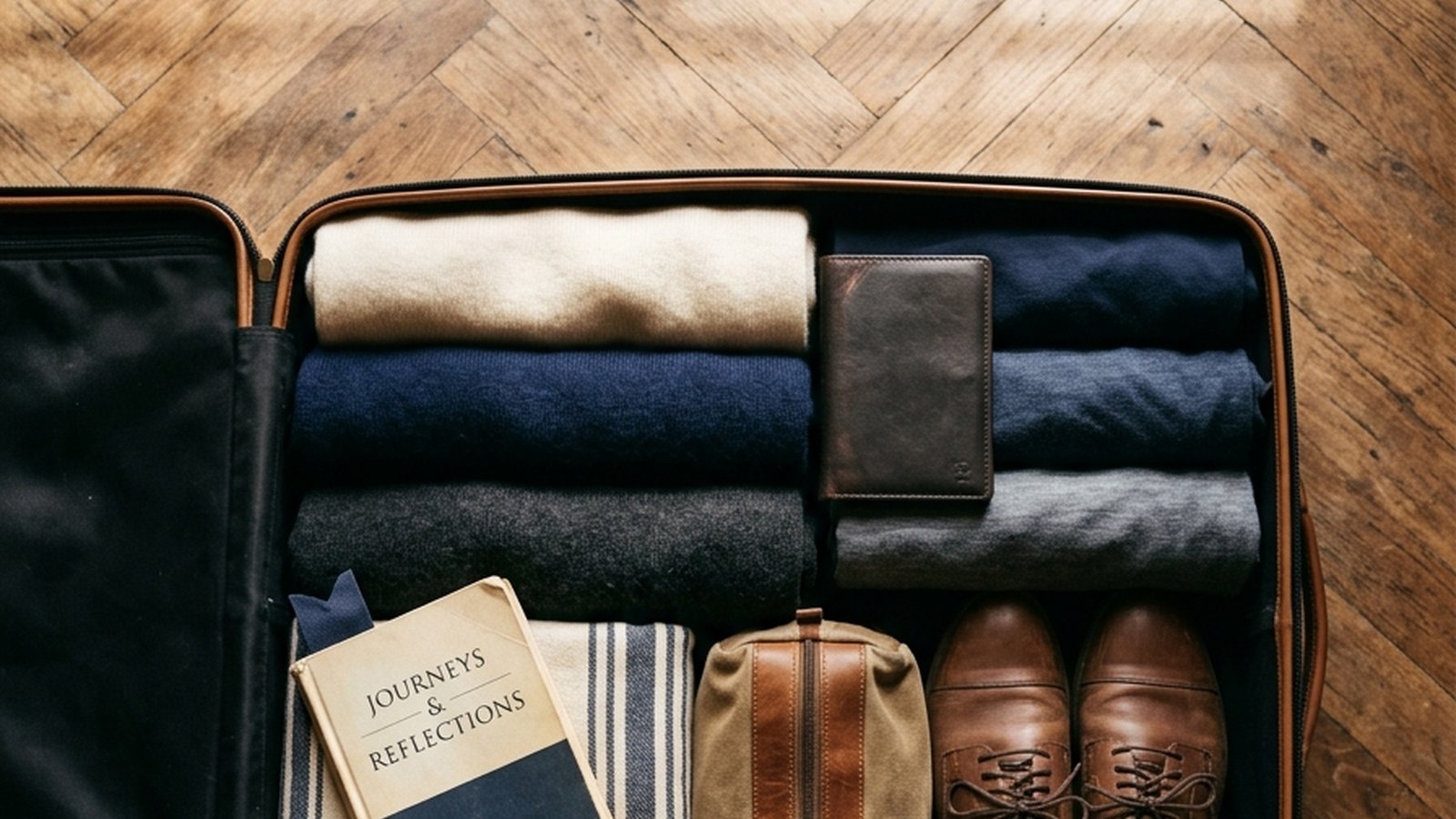
The first honest thing anyone should say about carry-on packing for two weeks is that it isn't hard. It's just slightly harder than most people are willing to be honest with themselves about. Once you accept that the same twelve items will get used every day and the rest is comfort psychology, the whole system collapses into something almost boring. Which is the point.
The three questions that solve most of it
Before anything goes in the bag, three questions strip out about half of what you were going to pack.
Will I actually wear this more than twice? Anything you'd only wear on one specific evening — leave it. It's a costume, not a garment. Can I buy this at the destination if I actually need it? Toiletries, socks, a jacket for unexpectedly cold nights, cheap paperbacks. Buy it there if the moment arrives. Am I packing this because I'm afraid or because I need it? Fear packing is what fills the last quarter of the bag with items nobody uses. Notice it. Refuse it.
The uniform principle
Two weeks with one carry-on works when you commit to a small colour palette and stop pretending every day needs an outfit. Three tops, three bottoms, one nicer layer, one warmer layer. All in colours that mix (navy, olive, cream, black). That's the whole wardrobe. You will wear each piece 3–4 times and nobody — genuinely nobody — will notice. Photos won't judge you either.
Merino is the cheat code
One category of clothing warps the maths of carry-on packing: technical merino wool. It doesn't smell after multiple wears, it dries fast in a hotel bathroom, and a single top does what three cotton ones do. Two merino T-shirts + one merino long sleeve + one merino base layer for cold nights = a system that quietly works. It's more expensive up front. It's cheaper than checking a bag every trip forever.
Shoes are the enemy of the carry-on
They're the single heaviest, bulkiest thing you'll pack. Rule: one pair on your feet, one pair in the bag, and the pair in the bag has to be small. If your "second pair" won't fit inside a single packing cube, it doesn't come. This forces the classic combination — one walking sneaker + one flat/collapsible dressier option — that covers everything from a museum day to a nice dinner without shame.
The dopp kit is where over-packing goes to die
Half the airline security bins in the world are full of full-size shampoo bottles that will be thrown away. Buy small refillable silicone bottles once, use forever. Anything you're not sure you'll need — a specific medication, a specific cream, a specific electronic — goes into a tiny "just in case" pouch that lives at the top of the dopp kit. Everything else in the bathroom cabinet stays home.
Electronics: the honest minimum
Phone. Charger. A wall plug adapter for the country you're going to. Headphones. That is the honest minimum for 90% of trips. You'll want to pack a laptop, an e-reader, a portable battery, a camera, a second charger, a cable organiser. Ask the three questions again. If you're not travelling for work, the laptop stays home most of the time — and you'll like the trip better for it. Our piece on how to plan a trip without internet is basically an argument for exactly this posture.
The one flat pouch that solves paperwork
Passport, second-form-ID, one printed emergency contact card, insurance summary, and any physical tickets or vouchers. All in one flat A5 zip pouch. It lives in the same pocket of the same bag every trip. This one habit prevents 90% of "where did I put…" moments in airport queues.
Packing cubes are worth the money
Not for the compression — the compression benefit is small. For the navigation. Two weeks of living out of a suitcase is exhausting because you rummage. Three cubes — tops, bottoms, underwear/socks — turn the suitcase into a chest of drawers you can actually see into. You'll gain 5 minutes a day and lose the low-grade irritation of not finding anything.
Laundry is a system, not a scramble
The single mental shift that unlocks the two-week carry-on is accepting that you'll wash clothes once. Not "if there's a laundry nearby" — plan it. Around Day 5 or 6. Most hotels do laundry for a modest fee, many Airbnbs have a washing machine, every hostel has a laundromat within a block. This one planned laundry day extends a carry-on trip indefinitely. Combined with two merino tops that get rinsed in the sink between machine washes, you never run out.
The 20-minute repack ritual
On Day 7 — the midway point — take everything out of the bag, look at what you haven't touched, and put it in the "return to home" pile. Anything you haven't used by Day 7 you won't use in Week 2 either. Move it to the bottom of the bag or, better, ditch it. This one exercise trains your future packing better than any list.
What stays home, always
The "just in case" umbrella. The full-size laptop for a leisure trip. The second belt. The third pair of shoes. The dressy-only shirt. The formal shoes for one meal. The book you're going to "definitely read this time." The five backup cables. The travel iron. The full first-aid kit (a strip of ibuprofen + a couple of plasters is a first-aid kit for a two-week trip). The formal blazer for a "just in case" event that never comes.
What always comes, even for a weekend
A small paperback book. Not for reading, exactly — for having a thing in your hand at a bar, on a train, at a solo dinner. Anyone who's read our solo-dining piece knows the paperback is the traveler's silent Swiss Army knife. Also: a pen. A folded silk scarf (surprisingly versatile). Earplugs. A small toothbrush case. A folded lightweight tote for market days.
The system in one paragraph
Three tops, three bottoms, one warm layer, one nicer layer, two pairs of shoes (one on, one packed small), one dopp kit with refillable silicone bottles, one A5 paperwork pouch, one electronics pouch (phone + charger + adapter + headphones), three packing cubes, a paperback, and a laundry plan for Day 6. That's every trip up to a month. The bag isn't the constraint. The self-honesty is.